Signal
Loading the stream…
WDSF 2026 results are on record — 10 awards · 11 winnersSee the record →
Loading the stream…
What’s moving in agentic workstations and workflows — drawn from a reviewed source list, scored, and kept at a permanent address you can cite.
Curated and full layers · newest first · scored, sourced, citable
The ledger as a map. Dashed edges are machine-suggested (embedding similarity and duplicate clusters); solid edges are editorial — they appear only where a blog post cites an entry.
Raw data: signal-graph.json
Filter by category
1250 entries in the full stream matching the current filters
Community discussion on r/LocalLLaMA asking members which agent harness (orchestration framework for AI agents) they use and their reasons for choosing it.
Offers a crowd-sourced comparison of agent frameworks from local LLM practitioners, useful for readers narrowing down tooling choices.
A Reddit post on r/LocalLLaMA asks for opinions on running the Ling 3.0 tiny model on CPU. No further content or excerpt is available.
Title-only post soliciting opinions on a small model running on CPU; no body, no data, no setup details to extract.
Otaku is presented as a frontend interface for working with LLMs, announced on the r/LocalLLaMA subreddit. No further details on features or release status are available from the title alone.
A new LLM frontend is a marginal addition to an already crowded tooling space; relevance is moderate without feature details to assess differentiation.

Latent Space teases a five-day hands-on with xAI's Grok Bot, claiming it matches OpenClaw's programming power but operates at a higher abstraction level. No implementation details, code, or setup steps are provided in the excerpt.
Flags an emerging agent tool comparison, but the excerpt lacks enough detail to act on or evaluate the claim.
A Reddit benchmark post comparing three inference engines (NInfer, llama.cpp, vLLM) on a Qwen3.8-27B NVFP4 model running on an RTX 5090, measuring both output quality and tokens-per-second.
Hands-on comparison of inference backends on the newest consumer GPU with a fresh NVFP4 quantization format, useful for anyone sizing local LLM serving stacks.
A Reddit post on r/LocalLLaMA discusses using the Qwen 3 8B/27B models for agentic coding tasks and poses an open question about what comes next.
No excerpt is available, so the item cannot be evaluated beyond its speculative title; little concrete signal for readers.
Reddit thread asking whether to spend roughly $15,000 on a home server now or delay the purchase.
Open-ended opinion poll with no excerpt or data; no reusable signal for readers.
GitHub Copilot weekly release notes covering expanded model choice, content protections, and VS Code updates for managing agent sessions and preparing pull requests for merge.
Useful pointer for Copilot and VS Code users monitoring incremental changes to model availability and agent session tooling; specifics require following the full post.
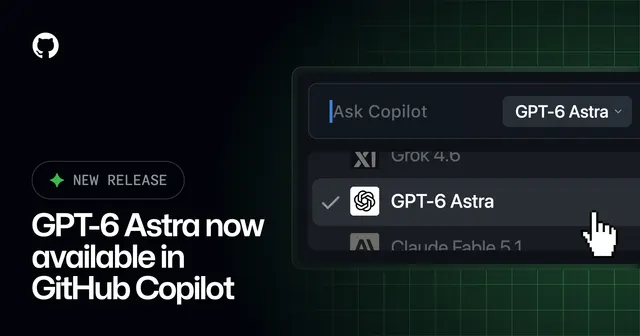
GitHub Copilot now offers OpenAI's GPT-6 Astra as a generally available model, positioned for long-horizon autonomous coding and agentic tasks.
Official GA of a model pitched at autonomous coding workloads in the most widely used AI coding tool; useful for readers choosing a Copilot backend.

Nielsen Norman Group offers a study guide that indexes its own articles and videos on applying artificial intelligence to UX tasks such as research, design, and content creation.
A consolidated index from NN/g for UX practitioners seeking their research-backed AI guidance in one place, though the item itself adds no new findings.
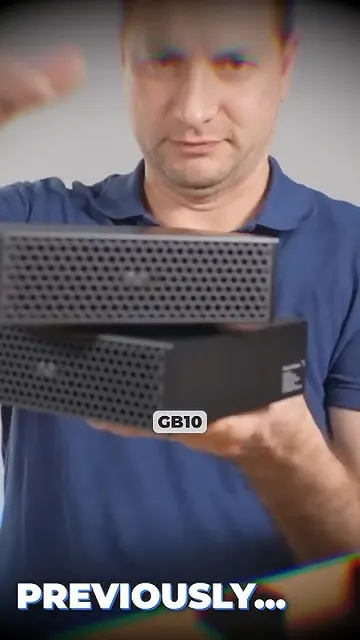
Alex Ziskind demonstrates connecting two Dell GB10 (DGX Spark) machines into a 2-node cluster, with affiliate links to 400Gbps switches used for the interconnect.
Firsthand walkthrough of wiring two DGX Spark units with specific 400Gbps switches, useful for readers planning multi-node local AI compute setups.
A pull request to the llama.cpp repository adds preview support for the Tencent Hy 4 (hy_v4) model architecture, enabling local inference for that model variant.
Records upstream llama.cpp architecture support for Tencent's Hy 4, useful for local LLM users tracking which models can run on local setups.
Paper proposing Speculative Macro Commit (SMC), a two-tier agent architecture where a fast drafter model pre-executes multi-step action chains on an isolated snapshot while an authoritative actor model runs normally; matching first steps trigger commit of pre-executed results. Shows 10-45% latency reductions on τ²-Bench Telecom and AppWorld with small accuracy trade-offs. Code released.
Concrete, reproducible latency optimization for tool-using agents with open code and specific model pairings; relevant to anyone running serial agent loops in production.
FGLGuard is a federated graph learning framework for safety in LLM-based multi-agent systems. It trains a graph attention detector on episode graphs locally per organization, sharing only model updates, and outperforms centralized in-domain baselines on Agent-SafetyBench, R-Judge, and AgentDojo while cutting attack-success rate by 43% at near-unguarded utility.
Cross-organization MAS safety with measurable federated-vs-centralized tradeoffs; relevant for anyone deploying multi-agent systems across trust boundaries.
The paper introduces Epistemic Fault Domains (EFDs) and a structural cut metric κ_E to formalize the failure mode where multi-agent quorums share upstream inputs, telemetry, or tool backends, collapsing multiple votes onto a single corrupted cause. It proves quorum size does not guarantee epistemic redundancy and presents the DAQC controller plus a 120-task benchmark.
Gives a precise vocabulary and runtime-enforceable metric for a correlated-failure mode in multi-agent voting that most teams currently handle only by intuition.
Proposes the Civilization Framework, in which the addressable unit is a 'civilization' (one human sovereign, a persistent ledger, interchangeable agents) rather than individual agents, with an Embassy Protocol for asynchronous inter-agent message delivery. A preregistered 1,908-trial experiment reports a temporal-weight effect: incorrect upstream claims arriving first captured 54.2% of receiver answers. Results are flagged exploratory.
Concrete hazard in AI-to-AI communication with measured effect size, plus a working protocol proposal; exploratory status and failed tool-use check temper the weight, but the framing is reusable for anyone designing agent handoffs.
An arXiv paper tests whether LLM agents can evade activation-based monitoring probes when explicitly told they are being watched. Using two game-theoretic scenarios (blackjack and prisoners' dilemma) with Qwen3-32B-AWQ and GPT-OSS-20B, the authors find the best probes retain accuracy across baseline, aware, and feedback conditions, and agents continue to collude.
Controlled experiment shows activation probes hold up against aware agents, useful for anyone designing oversight in multi-agent deployments.
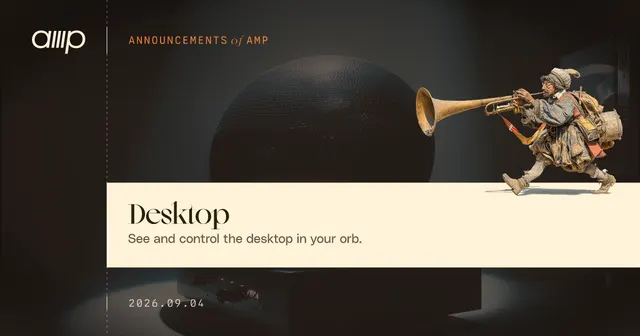
Amp's orb AI coding agent now includes an interactive high-resolution Linux desktop accessible from any orb thread, usable for verifying agent output on Linux, Android, Chrome extensions, file formats, CAD, and general computer-use tasks.
Primary-source feature release with a concrete user example: testing .docx exports in LibreOffice directly from the agent thread.
GitHub Actions received three updates aimed at clearer workflow visibility and finer-grained control, including a new REST API that returns information about runner version deprecations.
Official changelog listing concrete API additions for GitHub Actions runners, relevant for teams managing CI pipelines at scale.
GitHub announced deprecation of selected Copilot models effective October 2, 2026, across all Copilot experiences including chat, inline edits, ask and agent modes, and code completions.
Affects any Copilot user. Lists the affected models and the cutoff date so workflows depending on them can be migrated in time.
LangChain has revamped MCP support in langchain.mcp to align with the July 2026 spec rewrite, which introduced a stateless core. Elicitation is handled as a LangGraph interrupt, and tool lists are cached. MCP Tier 1 SDKs approach 500M monthly downloads, and ChatGPT MCP tool calls grew 98x in 2026.
Concrete technical details on LangChain's updated MCP integration, plus adoption figures, that anyone wiring agents to tools needs to know about.
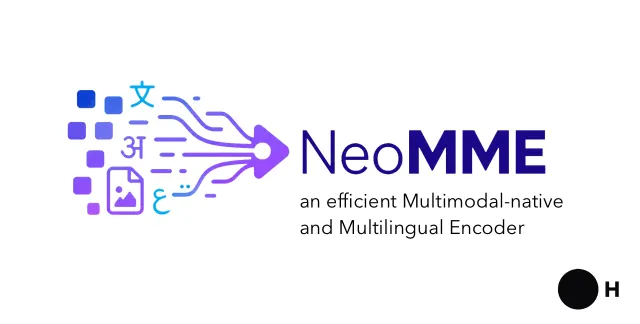
NeoMME is a 260M/800M multilingual multimodal encoder that processes text tokens and image patches in a single bidirectional Transformer trained from scratch with masked discrete-diffusion. Fine-tuned for visual document retrieval, the 260M model encodes ~51 pages/sec on an L40S GPU, about 2× ColModernVBERT throughput, and cuts late-interaction index storage from ~1.5 MB to 6 kB per page (255× smaller) while retaining >95% of baseline nDCG@10. Released under Apache 2.0 in Hugging Face Transformers.
First-party release with concrete throughput and storage benchmarks for visual document retrieval. The 255× index compression and 2× throughput over ColModernVBERT are specific, verifiable claims practitioners can test directly.
The authors built an open-source, model-neutral agent harness and compared it against Claude managed agents using the same model, reporting equal accuracy at up to 75% lower cost.
Firsthand benchmark of an open agent harness against a managed alternative, with a concrete cost figure — useful for anyone choosing agent infrastructure.
Playco used GPT-6 Astra to build three themed game prototypes from a shared grey-box foundation, reporting 50% fewer manual fixes than with their previous model.
Official OpenAI case study with a single metric, but the post lacks methodology, baseline, or workflow detail needed to judge or reuse the result.
A r/LocalLLaMA user shares their experience running the Qwen3.6 35b model in Q2_XXS (extreme) quantization, arguing that working with limited GPU resources remains workable in 2026.
Documents a heavily quantized local-LLM setup relevant to readers building workstations without high-end GPUs.
Community post introducing a hot-swappable n-gram based knowledge injection layer for llama.cpp, built around a modified Qwen-3.8 model, intended to let users swap knowledge modules at inference time without retraining.
Worth a look because hot-swapping knowledge without retraining is a concrete lever for local-LLM users who need fast domain or fact updates.
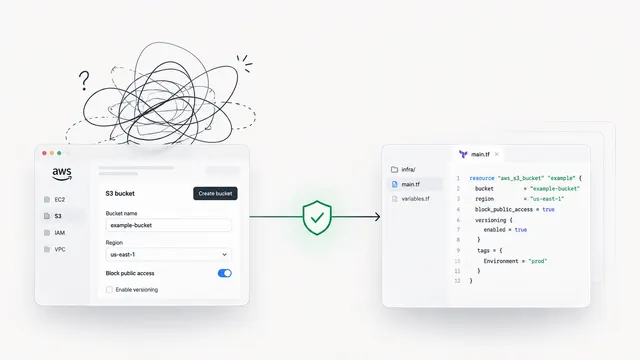
A blog post outlining a workflow for transitioning from manual cloud operations (Click-Ops) to Infrastructure as Code, with guidance on using AI agents safely so they do not break production infrastructure.
Concrete guidance on integrating AI agents into infrastructure workflows while avoiding common pitfalls that cause outages or misconfigurations.
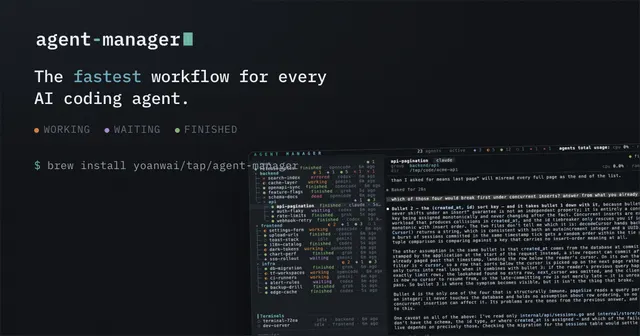
Agent-manager.dev is presented as a workflow tool for coordinating multiple coding agents. Posted to Hacker News with minimal traction (1 point, 1 comment) and no detailed discussion captured.
Low-traction primary-source post of a tool for running coding agents in parallel — worth a glance for readers juggling multiple agents.
Pull request to llama.cpp adds inference support for NVIDIA Nemotron-3-Puzzle-75B-A9B, a mixture-of-experts model, via the ggml backend.
Tracks which architectures are now runnable locally; useful for users selecting models within the llama.cpp stack.
Discussion post asking whether small 4B-parameter local language models can deliver an AI assistant experience comparable to larger models.
Recurring question about small-model capability with no concrete evidence in the excerpt; likely opinion thread rather than actionable setup.
A Reddit user on r/LocalLLaMA shares a personal rule of thumb for choosing AI models, though no content details are available beyond the post title.
Without the post body, the practical value is unknown; personal model-selection heuristics are common and rarely surprising.
A Reddit poster argues that KV cache memory requirements may constrain local LLM deployment more than raw parameter count, suggesting model selection and hardware planning should account for cache size rather than focusing solely on parameter totals.
Reframes the local-model sizing problem around VRAM cache rather than weights — a constraint readers often overlook when picking hardware or models.
Recourse is a smart-contract protocol that binds each admitted agent action to scope, recovery, evidence, payout, and collateral, settling residual harm that authorization gates and local rollback cannot address. It uses typed receipts, an optimistic-oracle challenge pattern, and ERC-792 arbitration, with adapters for Postgres, Git, and cloud sandboxes, deployed on Base Sepolia.
Cross-organizational agent accountability sits in the gap between admission control and rollback, and this paper proposes a concrete on-chain settlement layer with implementation and adversarial evaluation rather than just a framework sketch.
Introduces Agent Flight Recorder, an audit system for long-horizon tool-using AI agents that captures each action as a structured event with eight semantic fields. Uses hash chaining and Merkle batching for tamper evidence, with periodic on-chain anchoring of epoch roots. Evaluation across five ablations shows ~48μs per-event latency, 512 bytes per event, $2.30 per 100K events for L2 anchoring, and 100% tamper detection with zero false positives.
Concrete numbers on a tamper-evident agent audit stack with on-chain anchoring. Useful for anyone designing accountability layers for production multi-agent systems.
Researchers formalize the 'epistemic Sybil problem' in multi-agent AI systems, showing that multiple agents sharing a common evidence root do not produce independent observations. Controlled experiments with over 20,000 LLM-agent calls demonstrate that naive aggregation collapses posterior coverage from 0.94 to 0.26 as report count rises from 1 to 32, while correlated extraction errors further degrade calibration.
Challenges the assumption that more agents equals more evidence, with empirical calibration data showing how multi-agent aggregation can mislead without tracking evidential ancestry.
Paper introduces Tool Primitives, wrapping tools with LLM interfaces that use natural language instead of rigid API schemas. It presents ToolFace (a 25,519-function repository with dynamic retrieval) and HEART, a Planner-Router-Verifier framework. HEART reportedly outperforms SFT models by 10% and frontier models by 6% on average, with 84% completion on 50 real-world tasks and up to 85% lower API cost.
Concrete agent tool-orchestration architecture with benchmark results against frontier models. The natural-language-as-tool-interface idea is a notable design choice worth examining for agent stack builders.
ArcticSwarm is a multi-agent research architecture that separates evidence gathering from integration. Subagents post findings to a shared bulletin board while gated isolation prevents premature consensus; structured review at three commitment boundaries filters low-confidence candidates. It reaches 82.6% on BrowseComp-Plus with Qwen 3.5-27B and 73.6% on live-web BrowseComp with GPT-5.
Multi-agent research pipelines that vote early converge prematurely. The gated-isolation plus structured-review pattern is a concrete fix with measured lift on BrowseComp-Plus and BrowseComp.
OmegaUse-SOP is a human-in-the-loop system that converts human demonstrations of professional computer use into reusable standard operating procedure skills for GUI agents. It comprises four modules—Observe, Reason, Configure, Execute—that record expert operations as multimodal traces, abstract them into semantic steps, and execute skills in live GUI environments. Evaluated on PVsyst 7.2 photovoltaic simulation workflows with a power-sector partner.
Frames SOP Engineering as a counterpart to prompt engineering for professional GUI automation. Real deployment test in PVsyst 7.2 distinguishes it from benchmark-only agent work.
Introduces PROS, an interactive editor for scientific posters that addresses the 'articulation gap' by letting the system surface source-grounded candidate problems while users retain authority over which become repair goals. Includes PROS-Bench (120 papers, 320 PPTX posters) and reports VLM-rated diagnosis quality of 67.2/100 with 87.6% operator-verified target resolution.
Formalises the distinction between problem discovery and committed action in agentic editors, with a concrete benchmark and quantified evidence that the two can diverge.
User reports running Qwen3.8-Flash-Next on two RTX 3090s with DDR4, achieving decode speeds of 25–29 t/s (up from 17 t/s) after applying a specific expert cache pull request for the MoE model.
Concrete before/after benchmark of an MoE expert-cache PR on consumer GPUs, with reproducible hardware and token-rate numbers useful to local-inference tinkerers.
LangChain examines how Schneider Electric, Vodafone, and monday.com scale AI agents in production across Europe and the Middle East, highlighting central agent platforms, LLMOps practices, multi-agent architectures, and infrastructure for observability, evaluation, and control.
Patterns from three enterprise deployments show the platform and infrastructure layer needed once agent prototypes outgrow isolated teams.
Microsoft released VibeVoice-ASR-Streaming, a streaming automatic speech recognition model aimed at real-time transcription use cases.
Adds a new streaming ASR option from a major vendor for local transcription pipelines, but details are thin without the post body.
Nevermined integrates with LangChain to let agents autonomously purchase API access, tokens, and services mid-task using a delegated credit card with spending limits. A cookbook demonstrates an agent buying web search credits, topping up, and discovering and purchasing access to a new data provider.
Concrete pattern for extending agent autonomy from API calls to paid services without human intervention. Worth noting for anyone designing long-running or self-directed agent workflows.
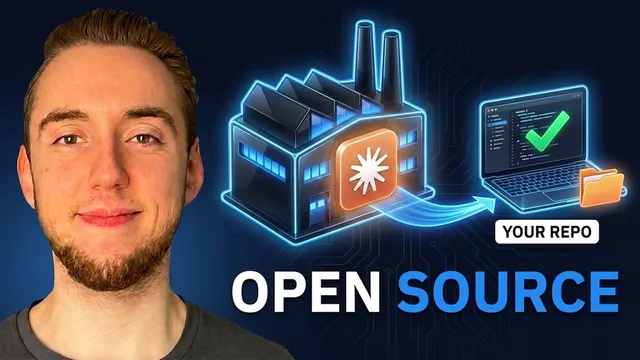
A YouTube video by Cole Medin titled "AI Software Factories Are the Next Big Thing (And I'm Building You One)"; no substantive content is available beyond the generic YouTube page placeholder text.
Provided content is YouTube boilerplate, not the video itself; nothing to assess beyond a hype-laden title.
Restless is a tool that makes APIs agent-ready by generating documentation from endpoints, catching failed calls and telling the agent how to fix and retry, and providing real-time per-call logs. Installed via `npx restless init`.
Sponsored newsletter slot; describes one CLI tool for API observability aimed at agent builders, with a concrete install command but no independent verification.

Hugging Face announces Funes, a local single-binary memory layer for coding agents (Claude Code, Codex, pi, Hermes) that indexes session traces for retrieval, ranking, and provenance, with optional sync to a user-owned private dataset.
Funes converts existing agent session logs into searchable ranked memory with no ML runtime dependency, addressing the long-standing gap of cross-session context for coding agents.
Perplexity released an open-source inference server for running Qwen models locally on Apple silicon Macs.
Company open-sourcing their own inference stack gives Mac users a concrete local option; worth checking repo against your hardware before adopting.
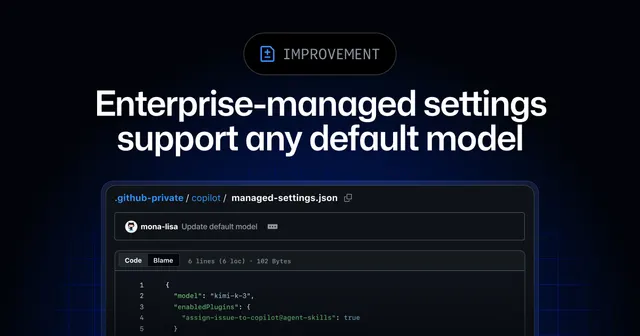
GitHub Copilot now allows administrators to configure any supported model as the default for new conversations via enterprise-managed settings.
Lets org admins standardize which Copilot model employees land on by default, tightening governance of AI coding at scale.
A user on r/LocalLLaMA reports that combining Q8 NGram with IQ4-quantized Qwen models in llama.cpp produces no inference speed degradation, suggesting a viable quality-preserving setup for local inference.
Reports a confirmed working quantization pairing for llama.cpp, useful for operators running Qwen locally who want quality without speed loss.
GitHub Copilot app and CLI now respect content exclusion policies set by enterprise, organization, and repository administrators, so excluded files are not used as context for Copilot suggestions.
For teams rolling out Copilot in regulated or sensitive codebases, this clarifies how policy boundaries translate into actual context filtering at the tool level.
