Signal
Loading the stream…
WDSF 2026 results are on record — 10 awards · 11 winnersSee the record →
Loading the stream…
What’s moving in agentic workstations and workflows — drawn from a reviewed source list, scored, and kept at a permanent address you can cite.
Curated and full layers · newest first · scored, sourced, citable
The ledger as a map. Dashed edges are machine-suggested (embedding similarity and duplicate clusters); solid edges are editorial — they appear only where a blog post cites an entry.
Raw data: signal-graph.json
Filter by category
256 entries in the full stream matching the current filters
A Reddit post on r/LocalLLaMA asks for opinions on running the Ling 3.0 tiny model on CPU. No further content or excerpt is available.
Title-only post soliciting opinions on a small model running on CPU; no body, no data, no setup details to extract.

Unboxing video of the MSI EdgeXpert GB10, a compact AI workstation also known as the NVIDIA DGX Spark, with affiliate links to 400Gbps networking switches.
Early hands-on footage of a rare AI workstation SKU before broader availability, useful as a sizing and form-factor reference for prospective buyers.
A Reddit benchmark post comparing three inference engines (NInfer, llama.cpp, vLLM) on a Qwen3.8-27B NVFP4 model running on an RTX 5090, measuring both output quality and tokens-per-second.
Hands-on comparison of inference backends on the newest consumer GPU with a fresh NVFP4 quantization format, useful for anyone sizing local LLM serving stacks.
A post on r/LocalLLaMA titled 'AMD unveils Threadripper Halo Station'; no excerpt or body text is available, so the content is unverifiable from the title alone.
Title suggests a workstation-class AMD Threadripper reveal relevant to local LLM rigs, but no body text means the actual details, source, and utility are unknown.
Reddit thread asking whether to spend roughly $15,000 on a home server now or delay the purchase.
Open-ended opinion poll with no excerpt or data; no reusable signal for readers.
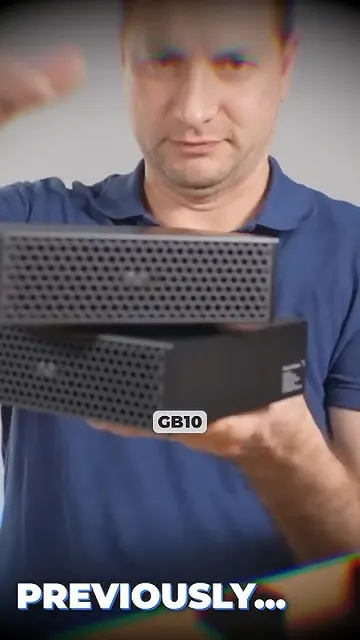
Alex Ziskind demonstrates connecting two Dell GB10 (DGX Spark) machines into a 2-node cluster, with affiliate links to 400Gbps switches used for the interconnect.
Firsthand walkthrough of wiring two DGX Spark units with specific 400Gbps switches, useful for readers planning multi-node local AI compute setups.
A Reddit post on r/LocalLLaMA referencing the MINISFORUM MS-S1 MAX-P495 hardware product, with no content excerpt available to assess further details.
Likely a user-facing post about a MINISFORUM mini workstation of interest to local LLM runners; worth a quick look for real-world impressions.
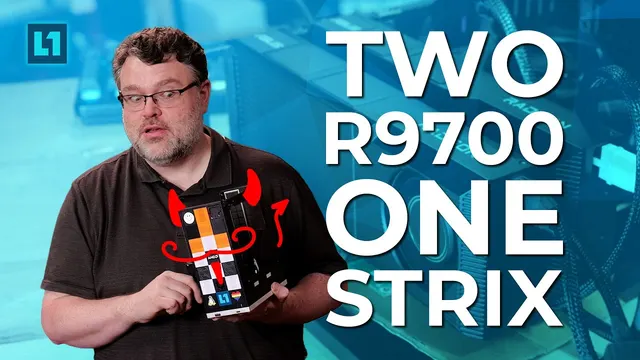
YouTube video page titled 'Unholy Strix Machine! Doubling up with R9700s' by Level1Techs. No substantive content, transcript, or description was provided beyond the standard YouTube platform text.
Submission contains only YouTube boilerplate with no extractable information on the hardware or setup mentioned in the title.
Reddit thread on r/LocalLLaMA asking whether hardware shortages relevant to local LLM workloads are easing. No content excerpt available.
Speculative community question with no excerpt to confirm substance; likely repeated discussion rather than fresh supply data.
A Reddit poster argues that KV cache memory requirements may constrain local LLM deployment more than raw parameter count, suggesting model selection and hardware planning should account for cache size rather than focusing solely on parameter totals.
Reframes the local-model sizing problem around VRAM cache rather than weights — a constraint readers often overlook when picking hardware or models.
User reports running Qwen3.8-Flash-Next on two RTX 3090s with DDR4, achieving decode speeds of 25–29 t/s (up from 17 t/s) after applying a specific expert cache pull request for the MoE model.
Concrete before/after benchmark of an MoE expert-cache PR on consumer GPUs, with reproducible hardware and token-rate numbers useful to local-inference tinkerers.
Perplexity released an open-source inference server for running Qwen models locally on Apple silicon Macs.
Company open-sourcing their own inference stack gives Mac users a concrete local option; worth checking repo against your hardware before adopting.
A post on r/LocalLLaMA claims that GLM 5.3 Flash was used to create a black hole mod for Minecraft, running entirely locally on a setup of 4 RTX PRO 6000 WS GPUs. No further details or benchmarks are provided in the available excerpt.
A data point on running a non-trivial model-driven creative task locally across four of NVIDIA's newest workstation GPUs, though the post lacks evidence and the model name appears unverified.
ErgoAssist is a head-worn ergonomic system that combines IMU-based posture tracking with consumer-grade EEG to estimate cognitive load. By detecting the user's mental state, it issues posture alerts only when the user is unlikely to be in deep focus. Lab results show 81% posture classification accuracy and 81% alert reduction alongside 38% better posture correction.
Couples posture detection with cognitive load to fix the core failure of ergonomic wearables: interrupting during focus. The 81% alert reduction with better outcomes reframes alert design as a context problem.
Research prototype of a fabric water-bottle sleeve with sensors and a small display showing a virtual pet. Drinking, standing, and refilling act as pet-care actions. A 20-student two-week study reported higher water intake and more movement episodes, alongside noted design tensions around guilt and focused work.
Concrete first-deployment data on a novel pet-based desk-side wellness device, with explicit design tensions flagged. Useful for anyone prototyping habit-formation hardware for desk workers.
A user on r/LocalLLaMA reports running a 104GB Qwen3.8-Flash-Next model on a 48GB Mac, achieving roughly 12 tokens per second generation speed.
Firsthand throughput numbers for a 100B-class model on consumer Apple silicon, useful baseline for anyone planning local LLM hardware purchases.
A user on r/LocalLLaMA reports that 2 of 3 NVIDIA CMP 170HX GPUs failed within two weeks, and the third has defective tensor cores, arguing current prices do not justify the reliability risk when repurposing mining cards for AI workloads.
Documents a specific failure pattern in repurposed mining GPUs used for local AI, which is a practical risk worth noting before buying.
Hands-on review of the HiDock P1, an AI voice recorder for meetings that uses proprietary BlueCatch technology to intercept Bluetooth audio directly. The review highlights solid construction and unique features.
Notes a niche hardware approach to meeting capture via direct Bluetooth interception, useful for anyone comparing AI recorders.
A developer built 'slotstream,' a tool that runs the 125B-parameter Qwen3.8-Flash-Next in 4-bit on Macs with as little as 16GB RAM using expert-offloading and SSD streaming on MLX/Swift, achieving ~12 tok/s on a 48GB Mac. Ships with auto memory/speed mode; MTP speculative decoding planned.
Firsthand tool with working install and measured throughput, showing a concrete technique for fitting a 125B model onto consumer Mac hardware via SSD streaming.
Reddit post claims Qwen3.8-27B runs at 2,000 prefill tokens/sec and 132 decode tokens/sec on a single RTX 3090.
Concrete inference throughput on consumer hardware is useful for sizing local LLM setups against specific models.
ExLlamaV3 received recent updates adding CPU offloading, support for new models GLM-5.3-Flash and Qwen3.8-Flash, and improvements to SC (scoped) quantization formats for local LLM inference.
Concrete tool updates that change how local LLM inference is configured; useful for anyone running models on consumer hardware.
Research paper comparing ML and DL models for classifying balanced versus imbalanced postural states in VR using kinematic, EMG, and EDA signals. A Mamba-inspired CNN reached 96.76% accuracy; SHAP analysis showed kinematic features dominated and that a 33% feature reduction preserved performance.
Niche VR balance-detection study with code release; useful as a reference for multimodal posture sensing but only tangentially relevant to conventional desk ergonomics.
A post on r/LocalLLaMA discusses a report from Puget Systems that the poster found confusing, likely concerning workstation hardware benchmarks relevant to local AI workloads.
Surfaces apparent confusion in a vendor benchmark readers may rely on for AI hardware decisions, but the post is editorial and lacks a body excerpt to assess substance.
A r/LocalLLaMA post observes that connecting a Mac to a Linux box via USB-C is becoming a common setup, presumably for local LLM workloads.
Signals a multi-machine pattern for local LLM work, but the post lacks any excerpt or detail to evaluate further.
Community member ran GLM 5.3 and GLM 5.3 Flash models locally on an RTX PRO 6000 Workstation GPU and used the models via BlenderMCP to build a 3D penthouse scene in Blender.
Concrete demonstration of a local agent driving Blender through MCP on workstation hardware, useful as a reference for similar 3D-generation pipelines.
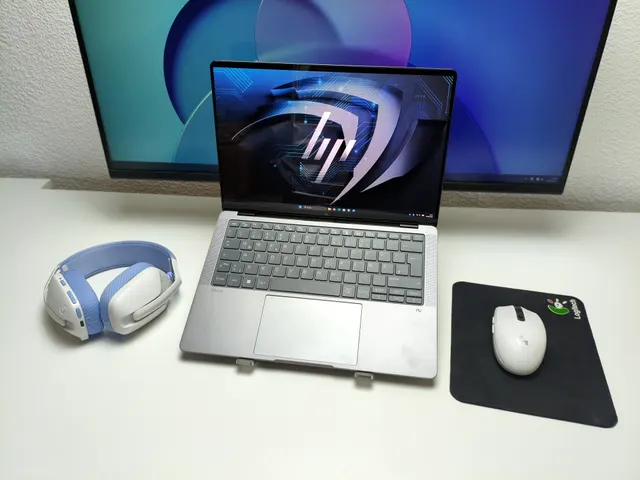
Review of the HP ZBook Ultra G1a 14 equipped with AMD Strix Halo APU and only 16 GB of RAM, testing whether that memory is workable for the fast integrated GPU. Compares performance with other Strix Halo notebooks and Intel-based rivals.
Concrete benchmark data on where 16 GB bottlenecks a current AI-capable laptop, useful for sizing memory when buying Strix Halo machines.
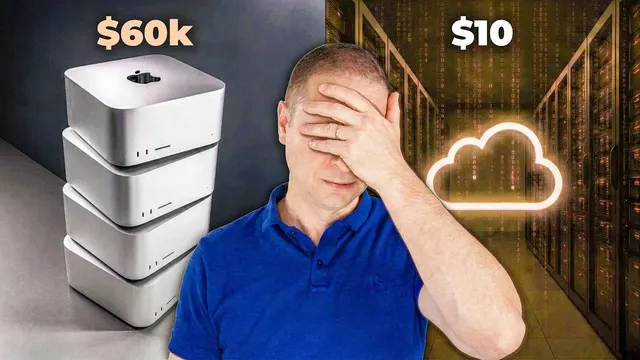
YouTube video by Alex Ziskind titled 'This $60,000 Mac Cluster Has a $10 Problem.' The page body contains only generic YouTube boilerplate text; no substantive details from the video are available.
Title hints at a high-cost Mac compute cluster with a cheap failure point, but no usable content was supplied — wait for transcript before citing.
A mixed-methods user study examining how people choose between world-anchored and body-anchored mixed reality interface elements across stationary and mobile contexts, finding anchoring preferences shift with mobility and depend on personal factors like accessibility, stability, and visual clutter.
Empirical data on MR anchoring trade-offs that can guide adaptive interface design for spatial computing workflows.
Demo of 52-page document extraction run locally on an iPhone 16 using Arctic Embed and Bonsai 8B via the KernelAI app.
Shows a working on-device embedding plus LLM pipeline on consumer mobile hardware, useful as a reference point for what local phone setups can handle today.
NVIDIA DGX Station is an AI workstation marketed as bringing data-center-class GPU performance to a desktop form factor for local model training and inference.
Reference point for top-tier local AI compute specs, though the price tier puts it out of reach for most home setups.
Report of running Qwen 3.8 Flash locally on a basic mobile phone, achieving 3.5 tokens per second inference.
Concrete on-device inference benchmark on minimal mobile hardware; useful baseline for anyone evaluating local LLM feasibility on phones.
A Reddit user reports running Qwen3.8-Flash-Next on four AMD Radeon RX 9700 GPUs with an optimized vLLM build, achieving 120 tokens/s generation and 12,000 tokens/s prompt processing in a single request.
Firsthand RDNA 4 local LLM benchmarks with vLLM are uncommon; the throughput numbers give a concrete reference for AMD-based local inference rigs.
First-person experience report on running the Qwen 3.8B Flash Next model on a workstation with plentiful RAM but limited GPU capacity, documenting the practical setup and performance.
Worth reading for anyone weighing a memory-rich, GPU-poor configuration against buying a dedicated GPU for local LLM inference.
A Reddit post on r/LocalLLaMA exploring the practical limits of the AMD X870E motherboard chipset, likely in the context of multi-GPU or large-memory LLM workstation builds.
Aimed at builders pushing LLM rigs to extremes, the thread may surface real-world constraints on PCIe lanes, memory channels, or GPU count that spec sheets gloss over.
Framework has officially announced a 192GB configuration, likely for their modular desktop, enabling local AI workloads that require large memory pools on repairable, modular hardware.
A 192GB modular desktop directly expands what local LLMs can run at home, relevant to anyone building a self-hosted AI workstation.
User benchmarked the Qwen3.8-Flash-Next model (79 GB at 2-bit quantization) running 350K context over 100 turns for 3.5 hours on a 128 GB M5 Max Mac, with a graph showing the speed-versus-context-depth tradeoff.
Firsthand M5 Max benchmark of a 2-bit 79 GB model at extreme context length — concrete data for sizing Apple Silicon for long-context local inference.
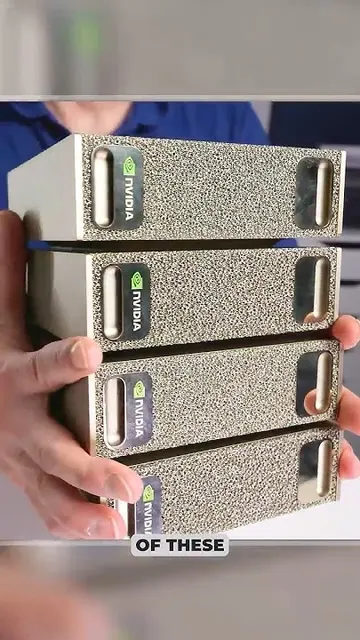
A YouTuber documents connecting eight NVIDIA DGX Spark units into a 1TB aggregate VRAM cluster, noting NVIDIA's public guidance stopped at two units. Includes specific hardware such as a 400Gbps switch and purchase links.
Hands-on multi-unit DGX Spark build that goes beyond NVIDIA's documented two-node limit, with concrete parts list and switching gear specified.
A r/LocalLLaMA post curating a list of open pull requests on llama.cpp that target CPU, RAM, disk, and hybrid CPU/GPU inference, intended for users without dedicated GPUs.
Pre-filters the llama.cpp PR queue so CPU-bound local-LLM users can spot specific performance improvements before they merge into a release.
Exo Labs claims its distributed clustering of M5 Ultra Mac Studios achieves 4.8 TB/s aggregate memory bandwidth for local AI inference workloads.
Concrete vendor datapoint for anyone sizing Apple Silicon clusters for local LLM serving; treat the figure as self-reported until independent benchmarks appear.
Reddit post demonstrating a 27B-parameter Qwen model running at 50 tokens/second with 100k context window on a single 16GB GPU via a fork called beellama.cpp. Specific hardware and quantization details are not provided in the excerpt.
Concrete inference numbers on a single consumer GPU. Useful baseline for anyone sizing local LLM hardware, though the post lacks methodology details.
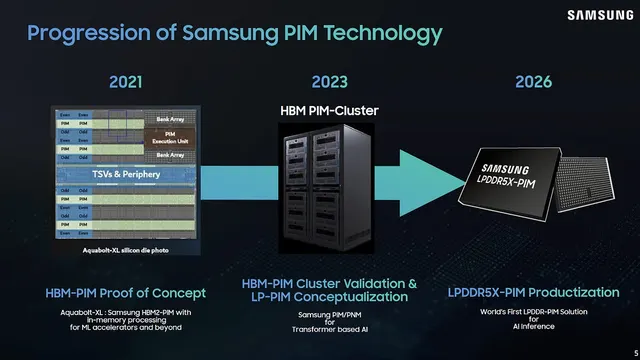
Samsung presented a processing-in-memory (PIM) implementation built on LPDDR5X at Hot Chips 2026, allowing computation to occur inside the memory device rather than at the CPU or GPU.
Concrete data point on memory-side compute for AI workloads, reported by a publication known for hands-on chip benchmarking rather than press-release recycling.
A Reddit post reports offloading an ngram lookup table for Qwen 3.8 Flash to SSD storage and streaming it back into the SGLang serving framework, presented as a memory-saving technique for local LLM inference.
Worked SSD-offload pattern for SGLang users running Qwen on consumer hardware with tight VRAM budgets.
Reddit post referencing the ROCm 10.0 release, AMD's open compute platform, framed around its role in supporting agentic AI workloads. No additional details or excerpt available.
ROCm releases matter to local LLM runners on AMD hardware, but the title alone, with no excerpt, limits what a reader can extract beyond the headline.
A Reddit post on r/LocalLLaMA reports running Qwen3.8-Flash on an RTX 3090 with 64GB RAM, stating that only 12GB of VRAM is needed for the setup.
Concrete VRAM and RAM figures for Qwen3.8-Flash let readers quickly judge whether their own hardware can run the model locally.
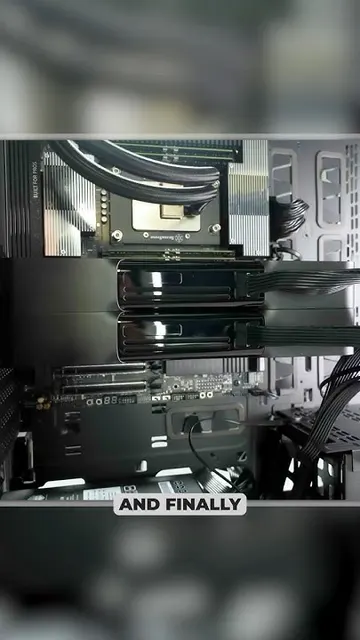
A YouTuber documents building a custom PC with two RTX Pro 6000 GPUs and a high-wattage power supply specifically for running AI models locally, comparing it to a Mac Studio cluster setup.
Shows real hardware costs, power requirements, and tradeoffs of running LLMs locally on workstation GPUs versus Apple Silicon clusters.
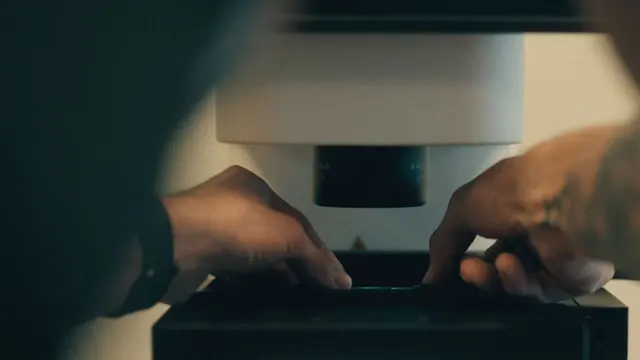
Anthropic opened a research preview of the Model Hardware Standard (MHS), a shared specification letting AI agents operate lab and manufacturing instruments such as microscopes, liquid handlers, and robotic arms in parallel. Co-developed with HHMI Janelia, MHS is model-agnostic, works with any device exposing a programmable interface, and uses protocols like MCP.
First-party detail on a new agent-to-hardware standard with named collaborators, MCP grounding, and a live preview program rather than vague vision.
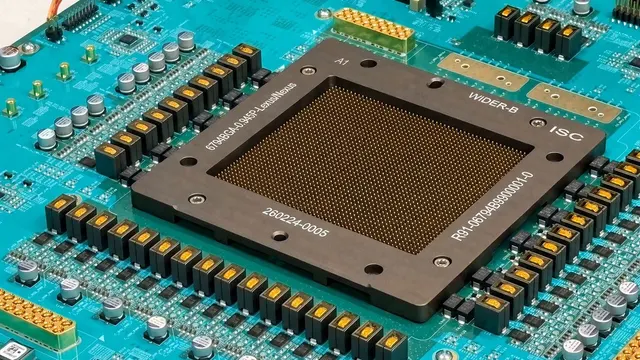
Latent Space AI News episode summarizing Hot Chips conference reveals: OpenAI's Jalapeño, Cerebras CS-5, Groq 3 LPX, and Apple M6 silicon announcements.
Consolidates four AI chip announcements from one conference into a single roundup — useful for tracking the silicon landscape without sitting through each talk.
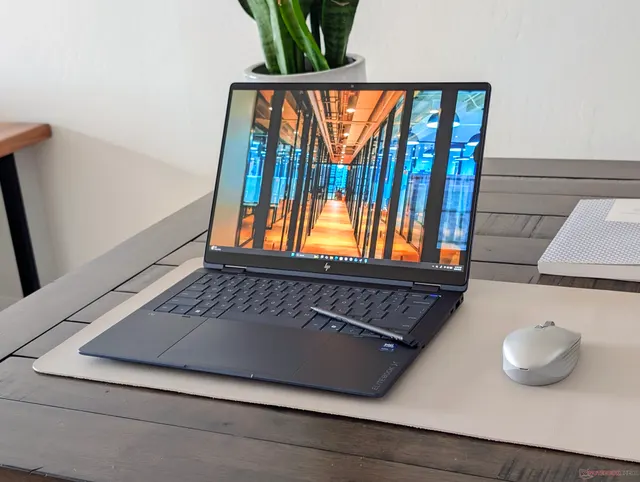
Hands-on review of HP's EliteBook X Flip G2i 14 AI convertible, featuring the debut of Intel Panther Lake Core Ultra 7 366H, an integrated stylus holder, and a starting price around $3000. Described as HP's strongest convertible yet.
One of the first real-world looks at Panther Lake silicon in a premium convertible, with measured performance and pricing for buyers comparing high-end AI-branded laptops.
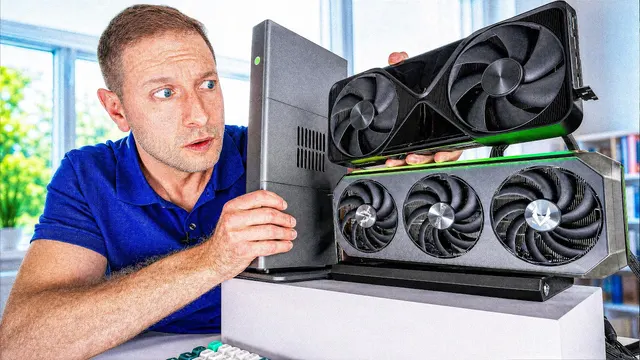
YouTube video titled '224GB of GPU Memory on 1 Desk and It Should Not Work' by Alex Ziskind. No substantive content is available beyond the title and YouTube's default page boilerplate.
Title hints at a multi-GPU desk build, but the source provides no usable detail — only platform boilerplate. No signal to act on.
YouTube video titled 'Mac Studio M5 Ultra is a DGX Spark Killer for Local AI' from Digital Spaceport. No transcript or additional content is available beyond the title and channel boilerplate.
Title implies a Mac Studio vs DGX Spark comparison for local AI hardware, but with no transcript or details, the claims and evidence cannot be verified.
