Signal
Loading the stream…
WDSF 2026 results are on record — 10 awards · 11 winnersSee the record →
Loading the stream…
What’s moving in agentic workstations and workflows — drawn from a reviewed source list, scored, and kept at a permanent address you can cite.
Curated and full layers · newest first · scored, sourced, citable
The ledger as a map. Dashed edges are machine-suggested (embedding similarity and duplicate clusters); solid edges are editorial — they appear only where a blog post cites an entry.
Raw data: signal-graph.json
Filter by category
296 entries in the full stream matching the current filters
A Reddit user observes they use local LLMs in a manner similar to 3D printers, suggesting iterative, on-demand prototyping rather than a single polished output.
The 3D printer analogy is a recurring mental model in the local LLM community; brief note on a familiar framing for readers exploring similar workflows.
A r/LocalLLaMA user shares their experience running the Qwen3.6 35b model in Q2_XXS (extreme) quantization, arguing that working with limited GPU resources remains workable in 2026.
Documents a heavily quantized local-LLM setup relevant to readers building workstations without high-end GPUs.
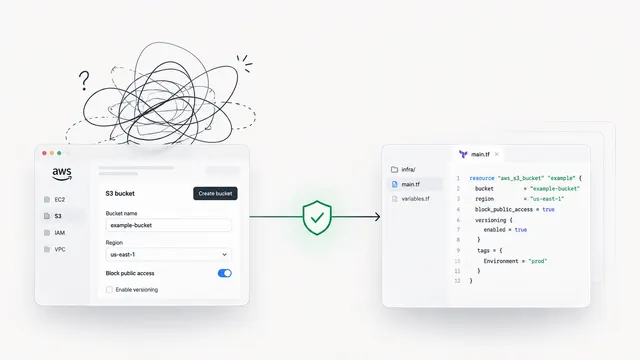
A blog post outlining a workflow for transitioning from manual cloud operations (Click-Ops) to Infrastructure as Code, with guidance on using AI agents safely so they do not break production infrastructure.
Concrete guidance on integrating AI agents into infrastructure workflows while avoiding common pitfalls that cause outages or misconfigurations.
Pull request to llama.cpp adds inference support for NVIDIA Nemotron-3-Puzzle-75B-A9B, a mixture-of-experts model, via the ggml backend.
Tracks which architectures are now runnable locally; useful for users selecting models within the llama.cpp stack.
Discussion post asking whether small 4B-parameter local language models can deliver an AI assistant experience comparable to larger models.
Recurring question about small-model capability with no concrete evidence in the excerpt; likely opinion thread rather than actionable setup.
A Reddit user on r/LocalLLaMA shares a personal rule of thumb for choosing AI models, though no content details are available beyond the post title.
Without the post body, the practical value is unknown; personal model-selection heuristics are common and rarely surprising.
A Reddit poster argues that KV cache memory requirements may constrain local LLM deployment more than raw parameter count, suggesting model selection and hardware planning should account for cache size rather than focusing solely on parameter totals.
Reframes the local-model sizing problem around VRAM cache rather than weights — a constraint readers often overlook when picking hardware or models.
Introduces PROS, an interactive editor for scientific posters that addresses the 'articulation gap' by letting the system surface source-grounded candidate problems while users retain authority over which become repair goals. Includes PROS-Bench (120 papers, 320 PPTX posters) and reports VLM-rated diagnosis quality of 67.2/100 with 87.6% operator-verified target resolution.
Formalises the distinction between problem discovery and committed action in agentic editors, with a concrete benchmark and quantified evidence that the two can diverge.
ATV Big Air Tour reports using ChatGPT to compress three days of marketing and merchandising work into three hours, including converting merchandise photographs into a functional inventory website in fifteen minutes. The account appears in an OpenAI promotional case study with limited methodological detail.
OpenAI case study with self-reported time savings but no prompts, no workflow details, no independent verification. The photo-to-inventory claim is the only transferable nugget, and it remains undocumented.
A source-code anatomy of eleven production coding agent harnesses (Claude Code, Codex CLI, Gemini CLI, Aider, OpenHands, etc.), mapping seven canonical subsystems with minimal and maximal implementations, cataloging 29 recurring design patterns, and including a longitudinal sample showing convergence over one quarter. Closes with 18 design recommendations and a minimum-viable-harness scaffold.
First systematic source-code dissection of major coding agents across ~4M LOC, yielding concrete patterns and a 90-line scaffold readers can actually build from.
Research prototype of a fabric water-bottle sleeve with sensors and a small display showing a virtual pet. Drinking, standing, and refilling act as pet-care actions. A 20-student two-week study reported higher water intake and more movement episodes, alongside noted design tensions around guilt and focused work.
Concrete first-deployment data on a novel pet-based desk-side wellness device, with explicit design tensions flagged. Useful for anyone prototyping habit-formation hardware for desk workers.
A user on r/LocalLLaMA reports running a 104GB Qwen3.8-Flash-Next model on a 48GB Mac, achieving roughly 12 tokens per second generation speed.
Firsthand throughput numbers for a 100B-class model on consumer Apple silicon, useful baseline for anyone planning local LLM hardware purchases.
A LocalLLaMA user reports that after a week of running their local model at sampling temperature 3.8 for work tasks, they are considering reverting to 3.6, suggesting the higher setting produced worse results in practice.
A working user's reversal on high-temperature sampling, a modest counterpoint to the push-the-limits trend in local LLM circles.

A curated link roundup from Martin Fowler's site covering Simon Wilison's LLM cliché highlighter, NVIDIA's architecture for long-horizon autonomous agents using Claude and the AVO harness on kernel optimization and ARC-AGI-3, plus brief notes on CI with agents, AI biosecurity, and academic ghost-writing.
Fowler's grouping is useful for skimming, but the linked items are already circulating widely; the roundup adds framing rather than new evidence.
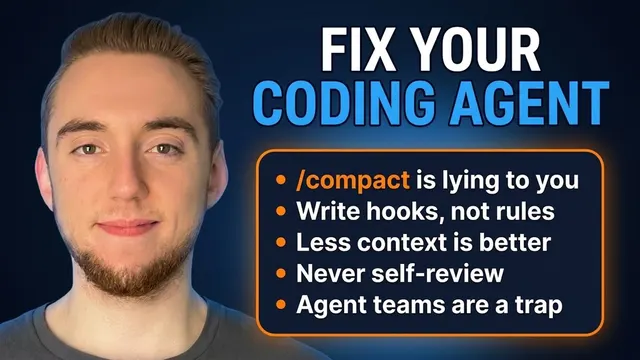
YouTube video by Cole Medin titled '11 Tiny Coding Agent Fixes With A Stupid Amount Of Payoff.' The provided text contains no substantive content beyond YouTube's default description boilerplate, so specific fixes and methods are not available.
Title signals actionable agent-coding tweaks, but no transcript or detail was supplied, so payoff claims cannot be verified or ranked.
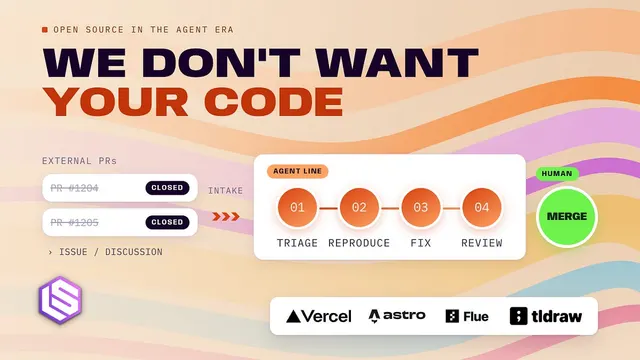
Top AI open source projects including Vercel's AI SDK, Astro, Flue, and tldraw are replacing unsolicited community pull requests with software factories, where teams of AI agents apply fixes and features.
Names four real projects pivoting from drive-by PRs to agent-driven maintenance, a pattern maintainers can study and adapt for their own repos.
A Reddit post on r/LocalLLaMA highlights the use of vision-capable language models for coding tasks, suggesting image or screenshot input can be leveraged in programming workflows.
Reminds practitioners that multimodal vision input is usable for code work, not just image tasks. Brief pointer, limited depth without body content.
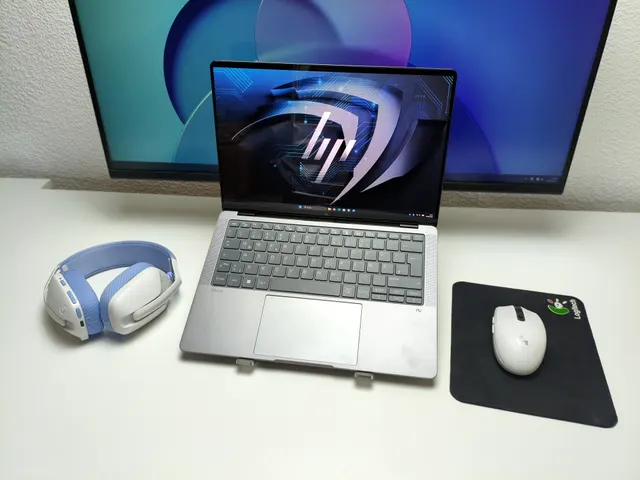
Review of the HP ZBook Ultra G1a 14 equipped with AMD Strix Halo APU and only 16 GB of RAM, testing whether that memory is workable for the fast integrated GPU. Compares performance with other Strix Halo notebooks and Intel-based rivals.
Concrete benchmark data on where 16 GB bottlenecks a current AI-capable laptop, useful for sizing memory when buying Strix Halo machines.
Reddit post on r/LocalLLaMA titled 'First time running local models.' No body text or excerpt is available, so the item can only be judged from the title.
A first-time beginner post is among the most common submissions on LocalLLaMA; without the body text there is nothing specific to extract.
Author describes achieving ~75 tokens/second decode speed running Qwen 27B (likely Qwen 2.5 27B) on a single 16GB RTX 5080 GPU, with implicit details on quantization or inference backend used.
Specific throughput numbers and hardware constraints for a current-gen consumer GPU running a 27B model are worth noting for local-inference readers.
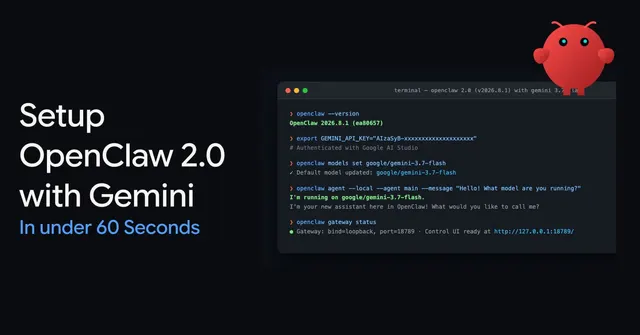
Phil Schmid's blog post describes a five-command process to install OpenClaw 2.0, connect it to Gemini 3.7 Flash, and start chatting with Google Search grounding via a terminal and web dashboard.
Concise command sequence for one tool pairing; useful for readers sizing up OpenClaw, though confined to a single install path.
Report of running Qwen 3.8 Flash locally on a basic mobile phone, achieving 3.5 tokens per second inference.
Concrete on-device inference benchmark on minimal mobile hardware; useful baseline for anyone evaluating local LLM feasibility on phones.
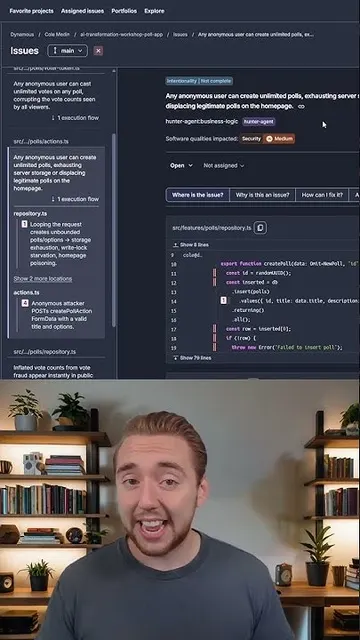
Cole Medin argues that poor AI coding agent results stem from flawed output verification, not model limitations, and presents a solution for better evaluation of agent-generated code.
Addresses a recurring failure mode in coding agent workflows and offers a concrete remedy, drawn from the creator's consulting experience rather than vendor claims.
A Reddit user reports fine-tuning a 0.8B parameter local model for dictation cleanup, claiming it matched a hosted frontier model on that specific task.
Shows a small fine-tuned model can rival frontier systems on a narrow job, a useful data point for readers weighing local setups over hosted APIs.
A Reddit post on r/LocalLLaMA exploring the practical limits of the AMD X870E motherboard chipset, likely in the context of multi-GPU or large-memory LLM workstation builds.
Aimed at builders pushing LLM rigs to extremes, the thread may surface real-world constraints on PCIe lanes, memory channels, or GPU count that spec sheets gloss over.
User benchmarked the Qwen3.8-Flash-Next model (79 GB at 2-bit quantization) running 350K context over 100 turns for 3.5 hours on a 128 GB M5 Max Mac, with a graph showing the speed-versus-context-depth tradeoff.
Firsthand M5 Max benchmark of a 2-bit 79 GB model at extreme context length — concrete data for sizing Apple Silicon for long-context local inference.
A user asks whether running Qwen 3.8 Flash Next on four RTX 3090 GPUs is worthwhile compared to running a 27B parameter model locally.
Common local-LLM hardware sizing question with no body text or replies; little signal beyond the title itself.
A personal blog post titled 'Agentic Workflow Design: Six Principles for 2026' shared on Hacker News, outlining principles for structuring AI-agent-based work. Article details not provided; low community engagement (2 points, 0 comments).
Worth a quick scan if you are actively designing agentic workflows, though the low HN traction and lack of supporting evidence temper its weight.

Nielsen Norman Group frames a 'Custodial Era' of UX in which AI lets product teams ship faster than UX can review. The piece argues UX must build shared judgment, accelerate evaluation, and guide AI-generated designs rather than gate them.
Names a concrete tension between AI-driven output speed and UX review capacity, with a directional response for practitioners already feeling the backlog.
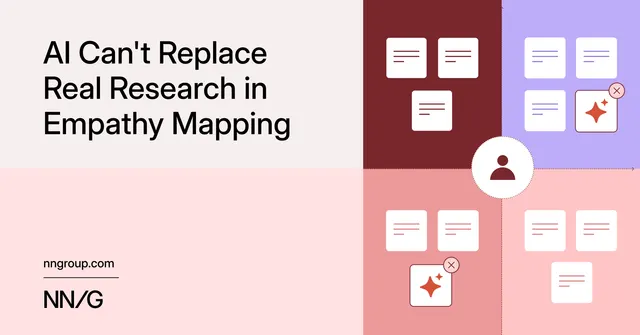
Nielsen Norman Group argues that AI can help organize existing user research data but cannot generate original research evidence about real users' experiences, particularly in empathy mapping exercises.
Draws a clear line on where AI fits in UX research workflows, useful for practitioners calibrating their reliance on AI tools during synthesis.
A user reports using the mmap function in llama.cpp to load the quantized Qwen3.8-Flash-Next IQ3_XSS model into 16GB of primary RAM plus 64GB of secondary memory, achieving 26 tokens per second inference speed.
Concrete mmap technique in llama.cpp lets you exceed physical RAM on existing hardware — a specific working method for local LLM users constrained by memory.
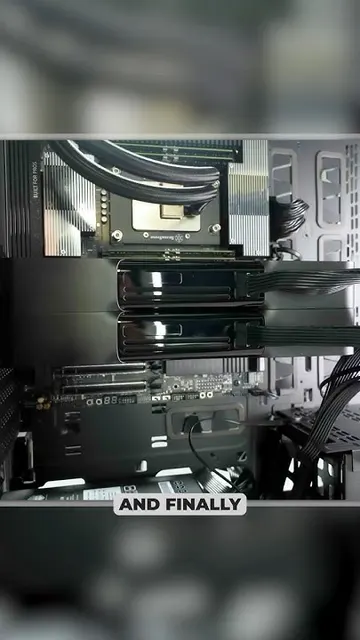
A YouTuber documents building a custom PC with two RTX Pro 6000 GPUs and a high-wattage power supply specifically for running AI models locally, comparing it to a Mac Studio cluster setup.
Shows real hardware costs, power requirements, and tradeoffs of running LLMs locally on workstation GPUs versus Apple Silicon clusters.
Developer built an open-source tool called 'tare' that analyzes and explains why Claude API quotas are consumed quickly, providing visibility into the causes of unexpected rate-limit hits.
Addresses a common, opaque frustration—unexpected Claude quota exhaustion. Gives readers a concrete way to inspect token usage and understand what is driving their consumption.
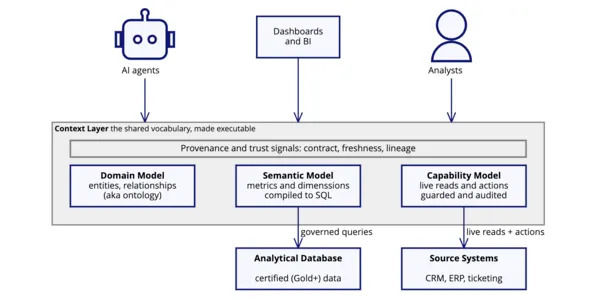
Argues that autonomous agents lack the context and judgment human analysts bring, so data systems need rethinking. Proposes four layers: trusted data foundation, context layer, semantic meaning, access layer controlling agent operations, plus continuous observability and auditability for governance.
Frames data readiness as a prerequisite for agentic systems, not an afterthought. The layered model and the 'agents act confidently on whatever they're handed' point give teams a concrete checklist.
Peer-reviewed article in the journal Ergonomics examining how cognitive and perceptual science can inform typeface selection for reading tasks.
Cited academic findings on typeface legibility offer evidence-based guidance for selecting fonts in documents, code, and presentations.
A developer describes their experience of running an entire software development workflow through AI, reporting it feels exhausting and soulless. The post drew brief discussion on Hacker News.
Useful as a counter-signal — surfaces emerging friction and fatigue in AI-centric dev workflows that practitioners and tool designers should register, even if it offers no concrete technique.
Systematic ablation on a production agentic platform evaluated tradeoffs in protein characterization workflows across federation topology, RL versus LLM-driven harnesses, model choice, and prompt expertise. Model choice dominated prediction quality (Opus 92-94% vs o4-mini 40-50%). A PPO policy matched accuracy at zero token cost; federation imposed negligible penalty.
Concretely quantifies when to deploy a cheap deterministic policy versus a costly reasoning LLM in a production scientific agent stack, with hard numbers on accuracy, latency, and reproducibility.
A peer-reviewed study evaluating a hypothetical workplace policy that encourages sitting in jobs typically requiring prolonged standing, examining how workers perceive such a policy shift.
Contrarian angle in a conversation dominated by 'sit less, stand more' advice, from a credible ergonomics journal. Useful for policy design in retail, healthcare, and manufacturing settings.

Podcast episode with Mike Lewis on AI proficiency across a workforce, framed through an L0–L3 model. Covers non-technical builders, AI resistance, converting tacit knowledge into durable processes, and identifying measurable business value from AI adoption.
An explicit L0–L3 proficiency scale applied to non-technical builders gives organizations a concrete lens for moving from blanket AI mandates to targeted capability-building.
A macOS menu bar app reads the text of the focused window every few seconds via the Accessibility API and writes it as plain markdown, one file per day. An AGENTS.md in the folder explains the format so Claude Code or other agents can query the user's work history.
Text-only capture via the Accessibility API avoids the cost and noise of screenshots or OCR, leaving a small markdown log an agent can read directly.
A Reddit user announces r/LowEndLocalAI, a community dedicated to running local LLMs on low-spec hardware.
A niche subreddit may aggregate hardware-specific configurations and workarounds for users without dedicated GPUs.
A Reddit post on r/LocalLLaMA titled 'GPU Poor - Don't overlook Laguna XS 2.1', apparently highlighting a tool or method aimed at users with limited GPU resources for running local LLMs. No excerpt content is available.
If Laguna XS 2.1 is indeed a lesser-known option for constrained-hardware inference, the post could be useful to readers building local-LLM setups on modest GPUs. Without body text the specifics remain unverifiable.
BridgeGuard is an air-gapped, edge-deployed agentic RAG system for FHWA bridge inspection compliance. It combines vector search over regulatory guides with SQL queries on NBI data, orchestrated by a multi-step ReAct agent. A section-aware chunking method preserves regulatory item boundaries, yielding 94.2% chunk integrity versus 28.4% for naive splitting, and 99.77% accuracy on Delaware's 874-bridge inventory.
Demonstrates a fully offline, multi-step agentic RAG pipeline that meets regulatory compliance at edge scale. The chunking comparison and ablations are directly applicable to other field-based compliance workflows.
A Reddit user reports that the open-weight Qwen 3.8 27B model successfully assisted with firmware and software preservation and emulation on an early 2000s ARM-based POS system, a task the user says Opus 4 could not handle.
Firsthand account of a 27B local model outperforming Opus 4 on a niche legacy-ARM preservation task; useful data point for those picking models for reverse-engineering work.
Show HN launch of Froging AI, a tool that consolidates image and video generation models into a single workflow. Posted on Hacker News with 1 point and 0 comments at time of capture.
Low-traction Show HN post (1 point, 0 comments). Logged for completeness in the agent-tools-setup ledger; no community signal yet to gauge real utility.
Author fine-tuned Gemma 4 12B for tool calling, reporting a 2.7x improvement, specifically to keep the model within a 16GB VRAM budget for local agent use.
Concrete fine-tuning numbers on a constrained-hardware setup — useful reference for anyone running tool-calling agents on a single consumer GPU.
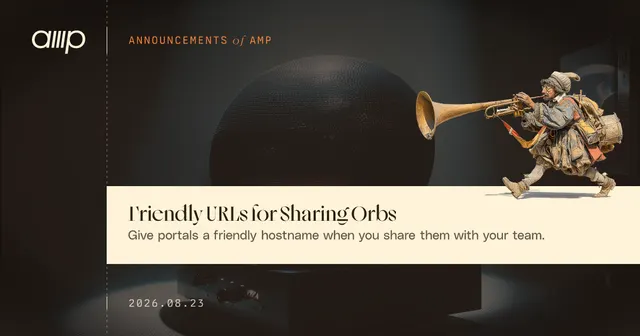
Amp added friendly URL options to its orb portals, letting users replace auto-generated identifiers with custom prefixes (foo--yourname.onamp.dev) or personal/workspace domains, configurable via the Portal tab or by asking Amp.
First-party feature note on Amp's portal hosting. Relevant if you ship long-lived apps through orbs and want branded, shareable URLs instead of UUID strings.
A user benchmarked DFlash 2 (PR build) in llama.cpp on a Qwen 27B model against all speculative decoding methods over three days. DFlash alone yielded 2.26x speedup on 100 real coding prompts; pairing it with an n-gram drafter reached 4.68x overall and up to 8x on specific cases.
A side-by-side benchmark of every speculative method on a real coding workload is rare. The n-gram-on-top combination is a concrete, replicable finding for anyone running local inference.
A Reddit self-post on r/LocalLLaMA titled 'This is why I run locally' with no excerpt available. The content consists of the poster's personal motivation for running LLMs locally rather than via cloud services.
Title-only post with no visible content; offers no transferable technique, benchmark, or rare insight beyond a personal stance common on the subreddit.
Reddit post advising buyers of used V100 or older NVIDIA GPUs to run a specific diagnostic check for memory issues before completing a purchase.
Relevant for anyone sourcing used datacenter GPUs for local inference; a pre-purchase memory check can flag failing units before money changes hands.
